
Heartbeat Opera and Opera Lafayette.
The Phoenix’ Review: An Exciting Life Turned to Ash
An opera about Mozart’s collaborator Lorenzo Da Ponte dulls down that librettist’s picaresque story.

Thomas Hampson as Lorenzo Da Ponte in ‘The Phoenix’ Photo: Lynn Lane By Heidi Waleson April 30, 2019 3:32 p.m. ET
Houston
Wolfgang Amadeus Mozart and Lorenzo Da Ponte were a perfect partnership, creating “Le nozze di Figaro,” “Don Giovanni” and “Così fan tutte,” three of the greatest operas ever written. One could only wish that some of that alchemy had rubbed off on Tarik O’Regan and John Caird, respectively composer and librettist (as well as director) of “The Phoenix, ” which is based on Da Ponte’s life story and had its world premiere on Friday at Houston Grand Opera. Instead, their opera is text-heavy and musically repetitive, with none of the quicksilver wit of the man who was its inspiration.
Da Ponte’s picaresque life story is certainly good fodder for theater. Born to Jewish parents in Italy in 1749, he converted with his family to Catholicism at 14, and got an education by studying for the priesthood. Banished from Venice for debauchery, he made his way to Vienna and for a few halcyon years collaborated with Mozart. Then their patron Emperor Joseph II died (as did Mozart), and Da Ponte was dismissed from court. Da Ponte married and moved on to London, where he was librettist for the King’s Theatre. Beset by creditors, he and his family fled to America in 1805, where he embarked on a series of commercial endeavors (grocer, schoolmaster, distiller, opera house impresario), all of which failed. He died in 1838, at age 89.
Messrs. O’Regan and Caird constructed the tale as a kind of tragicomedy. The 83-year-old Lorenzo (Thomas Hampson) and his son Enzo (Luca Pisaroni) have written an opera about Da Ponte’s life to raise money for the New York opera house venture. “The Phoenix” (which is also the title of the Da Pontes’ opera) is its dress rehearsal, with action occurring both onstage and backstage, sometimes simultaneously. Six principal characters play all the main roles in the opera-within-an-opera, with the Da Pontes playing themselves, and Enzo also playing his father as a young man. The title refers both to Mozart’s wry description of a great librettist—a mythical creature “forever talked about, but never seen”—and to Da Ponte’s own serial rebirths from the ashes.
Early scenes nod to the real Mozart-Da Ponte technique of integrating serious and comic moments; the orchestral language, particularly the use of mallet instruments, is fresh and appealing; and the imaginatively harmonized choral numbers are arresting. However, the solo vocal writing, particularly Lorenzo’s lengthy narrations of his early life, is uninteresting, and so much of the music is slow that the pacing of the opera sags. At first, these serious numbers have some dramatic force: there is the plaintive lullaby that Da Ponte and his Venetian mistress sing to their child; the somber departure of Emperor Joseph to war; a passacaglia for chorus and soloists that ingeniously marries Da Ponte’s life in London to the ebb and flow of the Thames. But as one ponderous set piece follows another, particularly in Act II, the disasters and failures, rather than Da Ponte’s urge for life, are what resonate, and not in a fun way.
There are other technical drawbacks. The libretto alternates between English and Italian, with so much information packed into it that the listener is glued to the supertitles, regardless of which language is being sung. There are a great many episodes, but while we are continually told things about Da Ponte and his aspirations, the music never really lets us feel his complexities as a character. In part, the division of the role was the problem: Mr. Hampson, who had a distractingly bad wig and sounded stentorian, was more of a narrator than a participant. Mr. Pisaroni’s lyrical baritone was more affecting, but the opera still painted both the rakish young Lorenzo and the ambitious Enzo in broad strokes.
Mezzo-soprano Rihab Chaieb sang the role of Maria Malibran (the famous 19th-century singer); in the Da Pontes’ opera, she played Nancy, Lorenzo’s long-suffering wife, and Mozart—the two people Lorenzo truly loved. She was better as the fey, unearthly Mozart; as Nancy, her voice took on a slightly metallic edge. Tenor Chad Shelton was Patrick Kelly, who had all the other male roles (Casanova, Emperor Joseph, etc.); they seemed musically interchangeable. As Giulietta and Faustina, high sopranos Lauren Snouffer and Elizabeth Sutphen supplied some welcome comic relief, battling performance nerves backstage and each other on it, as a pair of dueling divas in London. Patrick Summers was the efficient conductor; he also played the fortepiano continuo for the secco recitatives.
David Farley’s rickety-looking set evoked the backstage of a simple theater and used the turntable for fluid scene changes; cleverly, when Da Ponte got to America in Act II, the background opened up to suggest bigger spaces while maintaining the theater conceit. He also designed the basic period costumes. Lighting designer Michael James Clark differentiated the many locations; for example, sneaky, dark Venice from enlightened Vienna. Mr. Caird’s functional directing got the story from episode to episode, but it couldn’t help the opera catch fire.
Ms. Waleson writes on opera for the Journal and is the author of “Mad Scenes and Exit Arias: The Death of the New York City Opera and the Future of Opera in America” (Metropolitan).
A Revolutionary ‘Otello’
A rare black tenor to be cast in the part, Russell Thomas imbues Otello with vocal and psychological nuance.

Tamara Wilson as Desdemona and Russell Thomas as Otello in the Canadian Opera Company’s production of Verdi’s ‘Otello’ PHOTO: MICHAEL COOPER
ByHeidi Waleson
April 29, 2019 4:34 p.m. ET
Montreal
In 2015, the Metropolitan Opera decided to end its practice of using dark makeup for the tenor singing the title role of Verdi’s “Otello.” While that decision prompted considerable discussion about how makeup and costume can reflect racism, a bigger question was, why don’t major opera houses cast black singers in the role? It’s not an easy problem to solve: Otello requires a dramatic tenor with a wide vocal range, the power to cut through heavy orchestration, and the skill to make the long, declamatory passages sing—ideally, a voice that marries Wagnerian stamina and Italianate beauty. Even regardless of skin color, the universe of tenors who can sing it well is small. But the controversy has finally jolted opera companies into actively looking for black tenors who fill the bill.
Russell Thomas is one of them. On Saturday, the black American tenor sang his first staged Otello (he had previously performed the role in concert), and his assured vocalism and theatrical acuity were central to the success of the Canadian Opera Company’s chilling new production. Director David Alden’s absorbingly detailed staging, first mounted for the English National Opera in 2014, zeroes in on the toxicity of Iago, who methodically controls and destroys Otello just because he can. Designer Jon Morrell’s set, a bare, crumbling, semicircular room, reads like an arena through which the leather-jacketed Iago stalks his unwitting prey. He is always present, and he dominates the show.

Russell Thomas (center) as Otello PHOTO: MICHAEL COOPER
Of the two combatants, the electrifying Gerald Finley (Iago) displayed the bigger voice, and his baritone shifted easily from the outsize nihilism in the “Credo” to the slippery, almost caressing insinuations about the infidelity of Otello’s wife, Desdemona. Rather than try to compete, or bellow his way through the stentorian parts of the title role, Mr. Thomas went for nuance. His entrance “Esultate!” rang out with clarion conviction; later, as Iago slowly wound him up, he varied his volume and expression, so that when he exploded in fury, it came as a shock. This was an insightfully psychological portrayal: Even in the love duet of Act I, one sensed the outsider Otello’s underlying anguish, and his lack of confidence around anything other than war. Mr. Thomas began “Dio! mi potevi,” Otello’s moment of greatest despair, flat on his back, almost at a whisper, and the suicide at the end was sung with the bleakness of total defeat.
Desdemona is collateral damage in this masculine battle to the death. Tamara Wilson, who has a gloriously creamy, eloquent soprano, played her as an innocent but no fool. She made Otello’s wife a complex flesh-and-blood person, a contrast to the flat Byzantine icon of the Madonna that, in this production, represented Otello’s idealized view of womanhood. (Underlining that point, Iago and Cassio use the icon as a dartboard as Otello watches from the shadows.) Andrew Haji’s bright tenor ably captured a dandyish, drunken Cassio; Carolyn Sproule was a sensitive Emilia, frozen under Iago’s thumb. Conductor Johannes Debus built drama and suspense through pacing: The opening storm scene, for example, was terrifying without overdoing the brass.
The production places the opera in the late 19th century, around the time of its 1887 premiere; its Cyprus seems like an isolated garrison colony of a decaying empire, with restive inhabitants and soldiers. The excellent chorus, aided by movement director Maxine Braham, helped establish an atmosphere of insecurity: In the storm scene, the ensemble careened from side to side, as though it were on the foundering ship, and the celebratory fire chorus had an underlying current of violence. Mr. Morrell’s somber costumes and Adam Silverman’s shadowy lighting contributed to the evocation of a forgotten place where evil can fester. When the delegation from Venice turned up in Act III, all proper in top hats and elegant clothes, they were like emissaries from another world.
—Ms. Waleson writes on opera for the Journal and is the author of “Mad Scenes and Exit Arias: The Death of the New York City Opera and the Future of Opera in America” (Metropolitan).
Heading to the Cloisters
For the Clarion Choir
The Met Museum
is a madhouse! Unbelievable!
Opera Review ‘Semele’ Review: A Delicious Mashup of Genres
Harry Bicket and the English Concert return to Carnegie Hall for their annual Handel presentation.

Soprano Brenda Rae and Benjamin Hulett with the English Concert and the Clarion Choir in Handel’s ‘Semele’ at Carnegie Hall Photo: © 2019 Steve J. Sherman By Heidi Waleson April 15, 2019 3:49 p.m. ET
New York
Since their initial “Radamisto” in 2013, Harry Bicket and the English Concert’s Handel opera at Carnegie Hall has become a much-anticipated annual event, and Sunday’s performance of “Semele” (1744) continued this streak of exceptional music-making. With an exquisite English libretto by the poet William Congreve, “Semele” is a delicious mashup of genres, effortlessly melding comedy, sacred oratorio, and Italian operatic tragedy. Leading from the harpsichord, Mr. Bicket and his forces balanced those elements from the very first measures of the overture, as they countered heavy, rhythmic accents with upward-rushing arpeggios in the strings, and then sculpted the score’s theatrical arc, maintaining momentum through nearly three hours of music that includes a great many hit tunes.
Semele, a mortal who captures Jupiter’s fancy, is destroyed by her own ambition (to become immortal), with a big assist from Jupiter’s angry wife, Juno. Brenda Rae offered an oddly subtle characterization of the title role; her soprano was more lyric than sparkling, and sometimes overly soft. She was at her best in Semele’s moments of pure, happy triumph, such as “Endless pleasure, endless love,” after she has been extracted by divine intervention from her unwanted wedding ceremony to Athamas in Act I and has Jupiter in her thrall; and Act III’s, “Myself I shall adore,” in which Ms. Rae unleashed increasingly elaborate ornamental roulades to celebrate what Semele thinks is her imminent ascent to godhead. Ms. Rae was less persuasive in sorrow and defiance. She could have used more assertiveness, for example, in “No, no, I’ll take no less,” when Semele fatally insists that Jupiter appear to her as lightning and thunder. Instead, she receded, and her coloratura on the word “alarm” became almost inaudible.
Elizabeth DeShong, singing the double role of Juno and Semele’s sister Ino, took the afternoon’s vocal honors. Her opulent mezzo has contralto power in its lower range, and she embodied the comic side of Juno’s jealous rage as well as its viciousness, from her speedy accuracy in “Hence, Iris, hence away,” to her sidelong glances at her victim, to her nihilistic triumphal statement: “Love’s a bubble / Gain’d with trouble / And in possessing dies.” With his elegant tenor, Benjamin Hulett made Jupiter a lover, a manipulator (the famous “Where’er you walk” was clearly his ploy to enchant Semele and distract her from her ambitions), and finally, a truly regretful destroyer.
Bass Soloman Howard was forthright in the double role of Cadmus, Semele’s father, and Somnus, the god of sleep, coerced by Juno to destroy Semele. Ailish Tynan supplied a bright soprano and good comic timing for Iris, Juno’s servant, and countertenor Christopher Lowrey made the most of the role of Athamas, whose disappointment at his interrupted wedding to Semele can seem like filler. The superb 28-member Clarion Choir was a revelation: Full-voiced, with rhythmic precision and articulation as clear as the orchestra’s, the ensemble easily switched gears from the sensual languor of “Endless pleasure, endless love” to the moving, oratorical statement of the opera’s dark lesson: “Nature to each allots his proper sphere / But that forsaken we like meteors err: / Toss’d through the void, by some rude shock we’re broke, / And all our boasted fire is lost in smoke.”
Ms. Waleson writes on opera for the Journal and is the author of “Mad Scenes and Exit Arias: The Death of the New York City Opera and the Future of Opera in America” (Metropolitan).
Bound’ Review: Knowledge and Madness
The New York premiere of an opera based on the true story of a second-generation Vietnamese-American teenager who takes two jobs to support her brothers after her mother leaves the family, and is sent to jail for truancy even though she is an honor student.

By Heidi Waleson April 15, 2019 3:57 p.m. ET
New York
At the end of “Bound,” the 45-minute opera by Huang Ruo that had its local premiere at the Baruch Performing Arts Center, co-produced with Fresh Squeezed Opera, on Saturday, I most wanted to know why social-service agencies didn’t intervene in this tale. This was probably not what the creators had in mind. (Houston Grand Opera commissioned the piece as part of its community engagement work; it had its world premiere there in 2014.)
Bao-Long Chu’s libretto comes from a true story about a second-generation Vietnamese-American teenager who takes two jobs to support her brothers after her mother leaves the family, and is sent to jail for truancy even though she is an honor student. The opera tries to explore issues of loss and obligation in this immigrant community, but its telescoped narrative falls into cliché. As a result, even though the opera sets out the way each of the four characters—Diane (the heroine), Khanh (the mother), Stanley (the employer) and Judge Moriarty—is bound by a different set of requirements, outrage at parental abandonment and judicial overreach is the actual takeaway.
That said, the opera has some arresting music. Much of it is in the 10-instrument ensemble, which sets spiky harmonies and extreme timbral contrasts against Diane’s high soprano laments. In one striking moment, as Diane and the judge face off in the courtroom, a trombone and a pipa (a Chinese lute) accompany them, aptly capturing this extreme power imbalance. Stanley orders Diane around in a rhythmic scherzo; as Khanh appears to her daughter in jail, the richness of her mezzo suggests motherhood even as glassy instrumental writing evokes the homeland ghosts that took her away from her children. The two women have the most developed parts; Fang-Tao Jiang was an impassioned Diane; Guang Yang a forceful Khanh. Bass-baritone Daniel Klein (Judge Moriarty) and baritone Andrew Wannigman (Stanley) capably filled out the vocal quartet; Alex Wen led the ensemble.
The minimalist production, directed by Ashley Tata, had a clever scenic idea: An array of hanging shirts, bagged in plastic, evoked the dry cleaners where Diane works (Stephan Moravski designed the set; Corina Chase the costumes). But the video/projection element, designed by David Bengali, wasn’t successful, since the images were readable only when they appeared fleetingly on the front of the store counter, and fragmented when projected on the shirt array. Abigail Hoke-Brady did the dim lighting.
Ms. Waleson writes on opera for the Journal and is the author of “Mad Scenes and Exit Arias: The Death of the New York City Opera and the Future of Opera in America” (Metropolitan).
The Weekend
Yesterday Heidi and Lily doing Bach. Last night Huang Ruo. This afternoon Semele — a master class in continuo. And picking photos for my book! The Times wants $300 for the rights to my pigeon picture! https://www.nytimes.com/1994/05/28/nyregion/pigeons-on-the-pill-bring-cleaner-bryant-park.html
Clemenza did Tito
The Met
Last Day in Venice – Tintoretto extravaganza.
Happy 500th Birthday Jacapo!
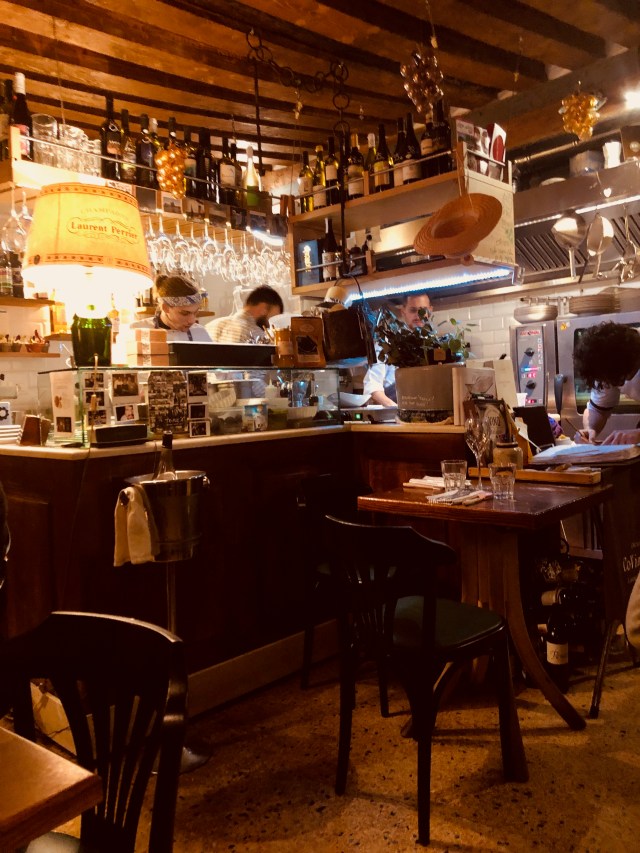
Another great meal thanks to Neal and Lewis. Brooklyn on the Adriatic 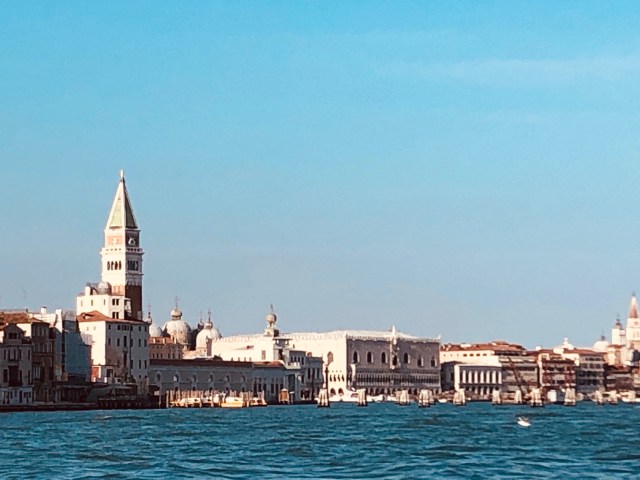
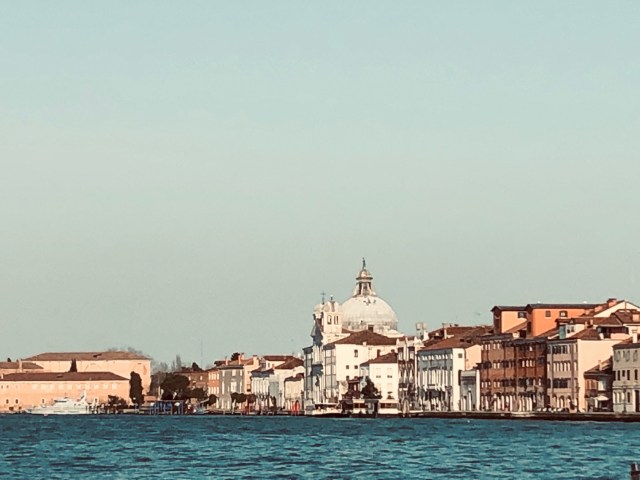
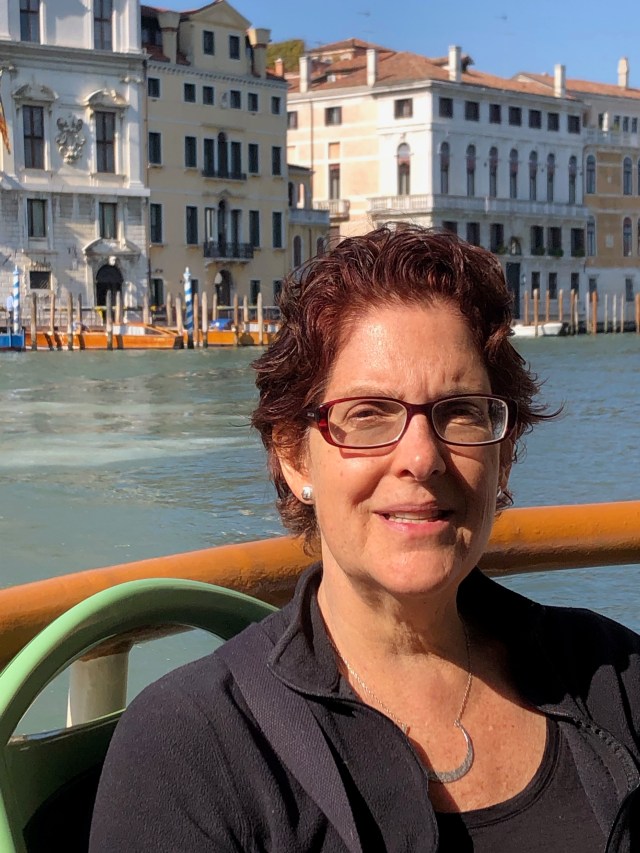
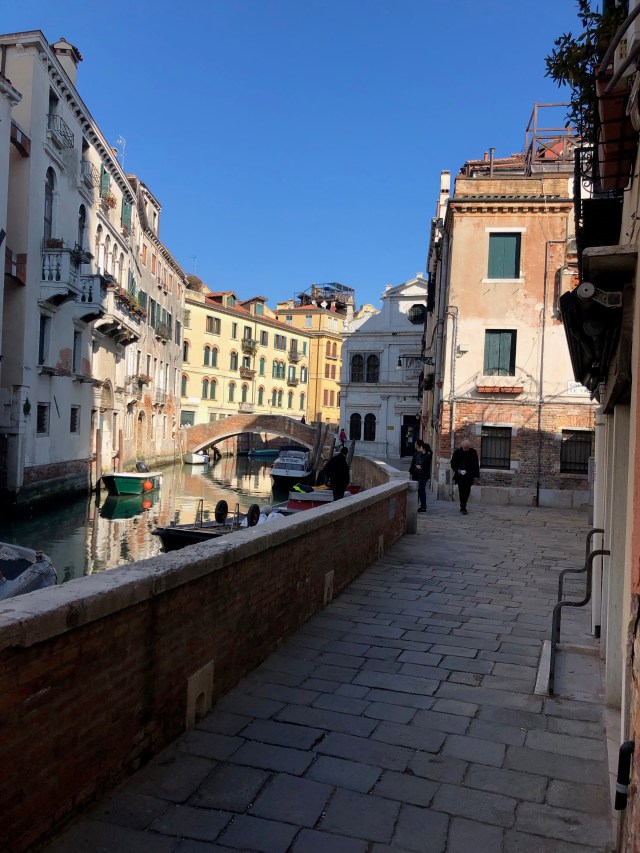
The light is exactly as Canaletto painted it 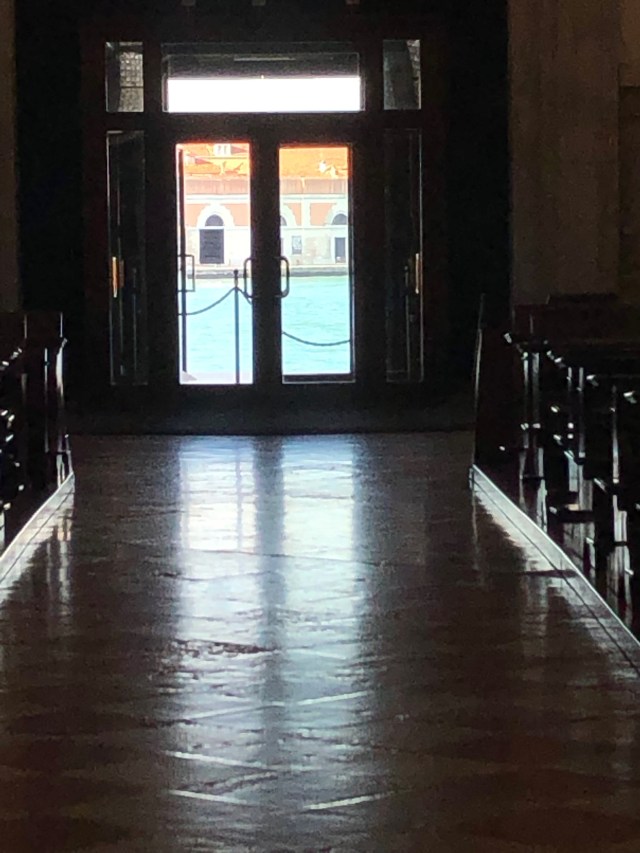
The Priest’s View from a Palladian alter 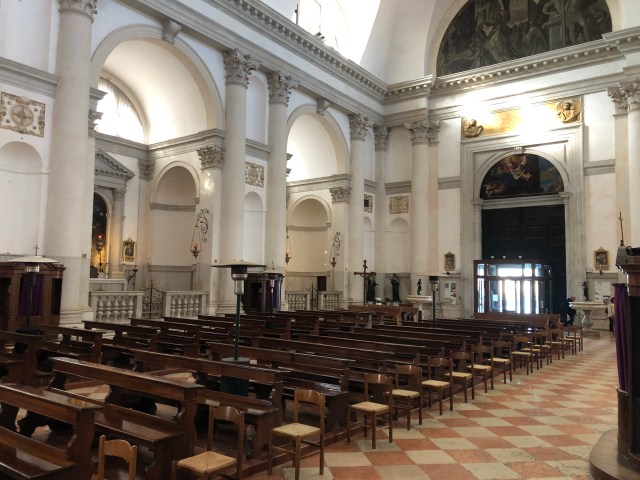



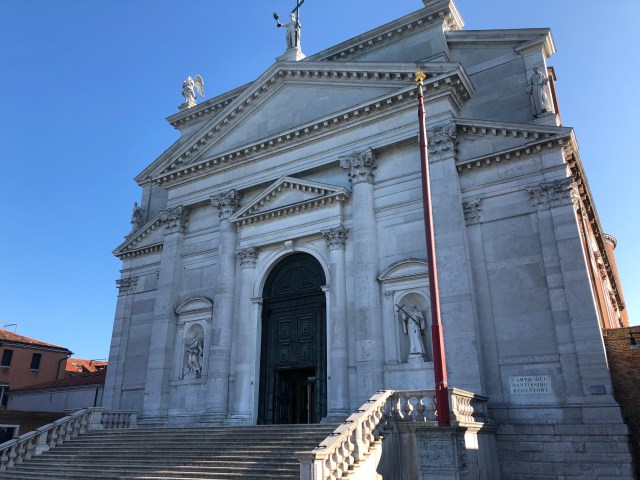
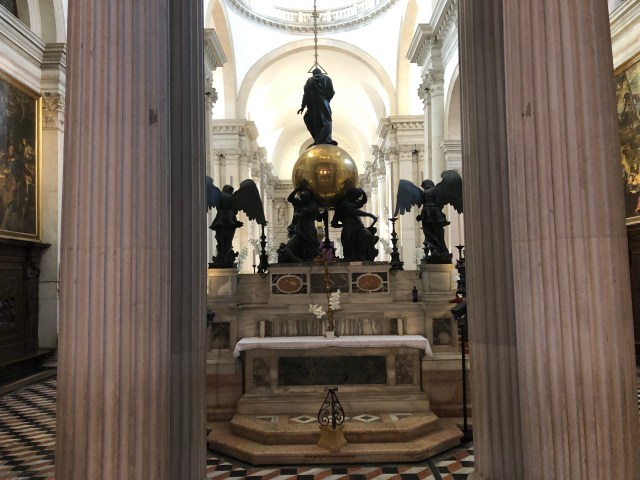

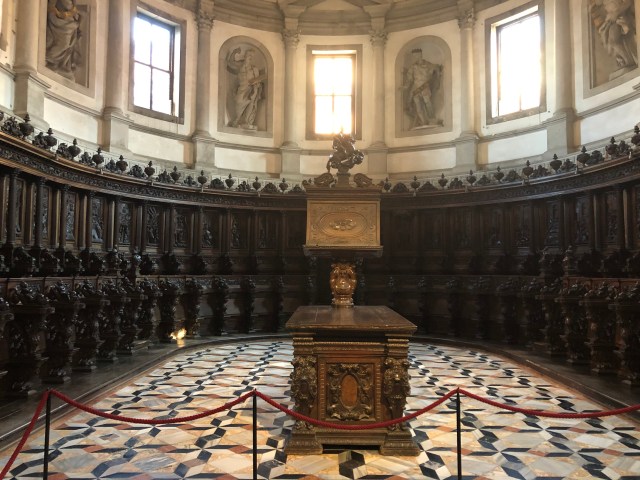
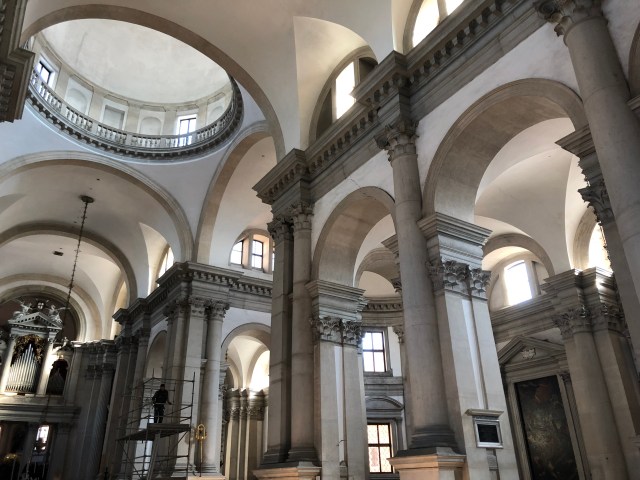
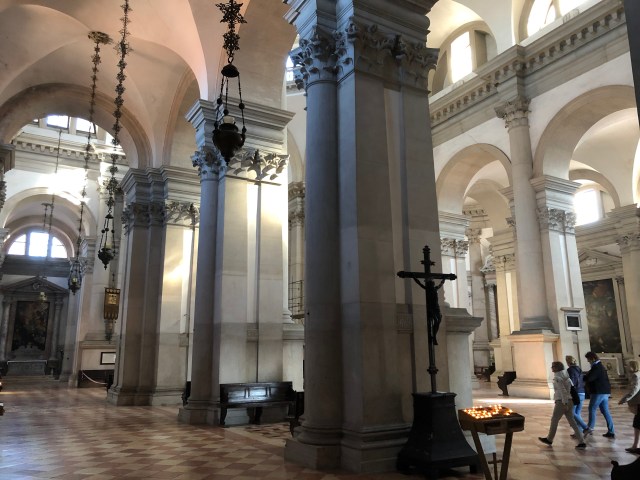
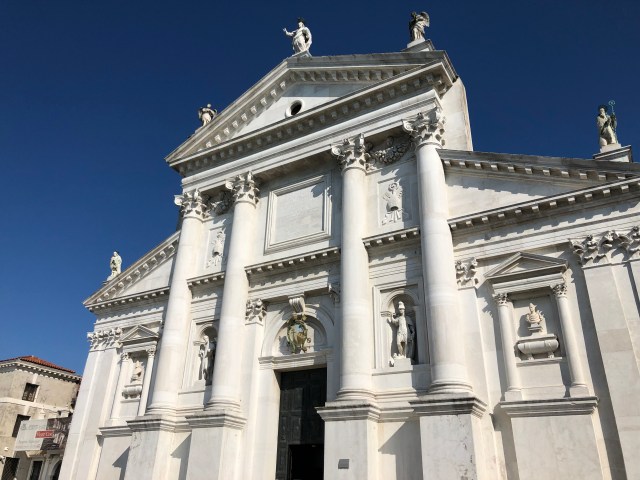
Palladio on the Guidecca 
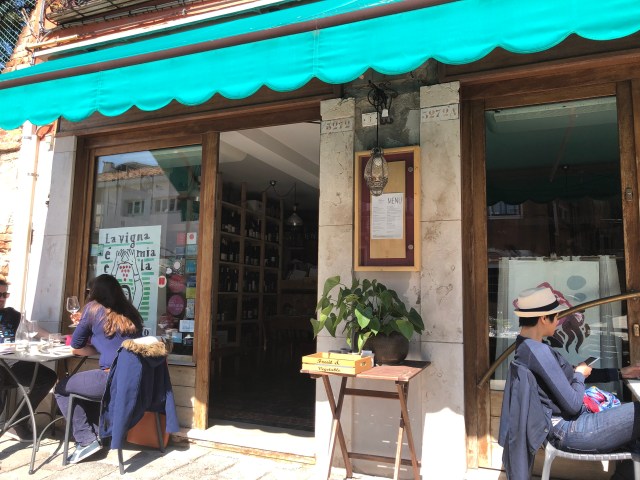
Lunch 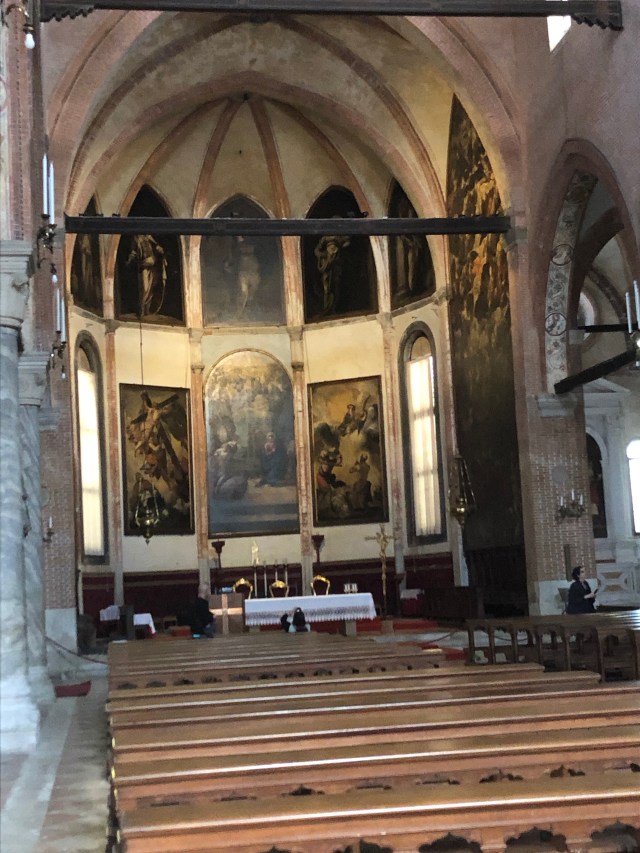
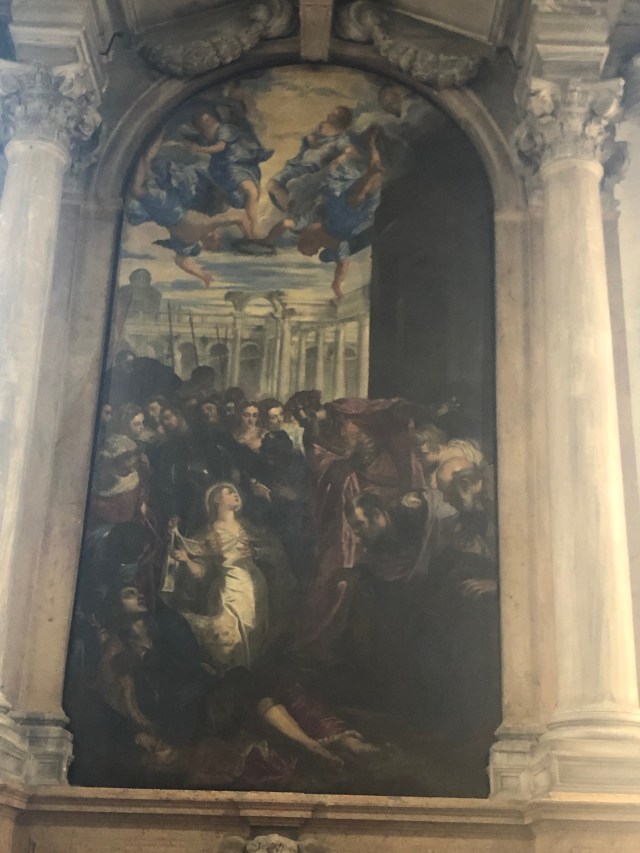
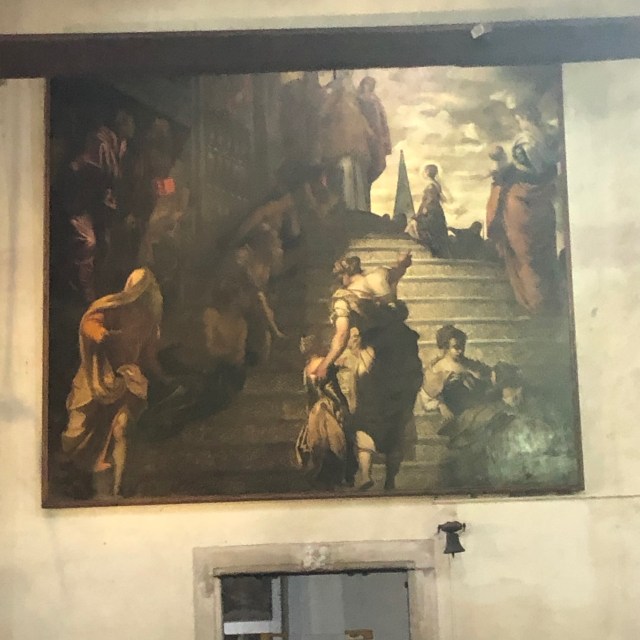
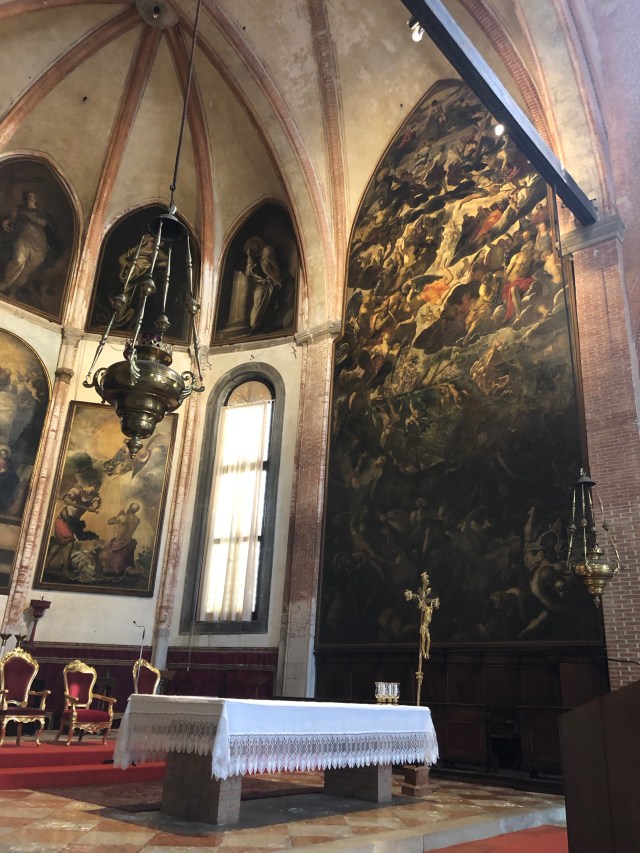


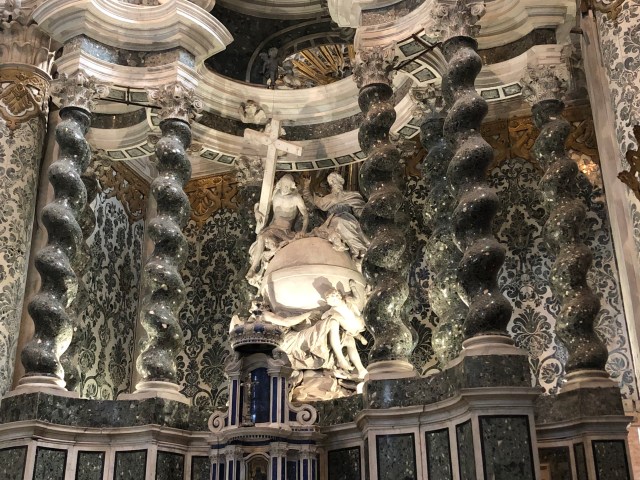

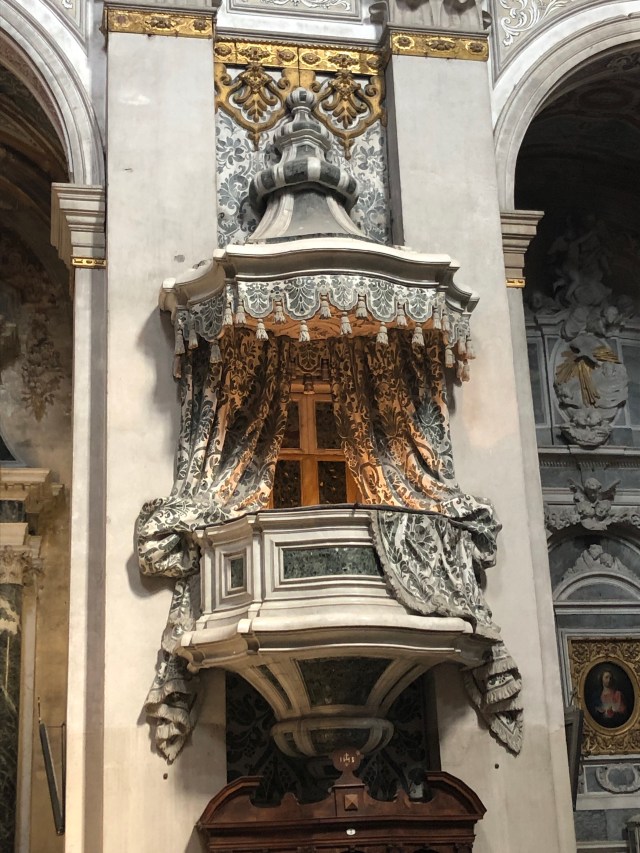


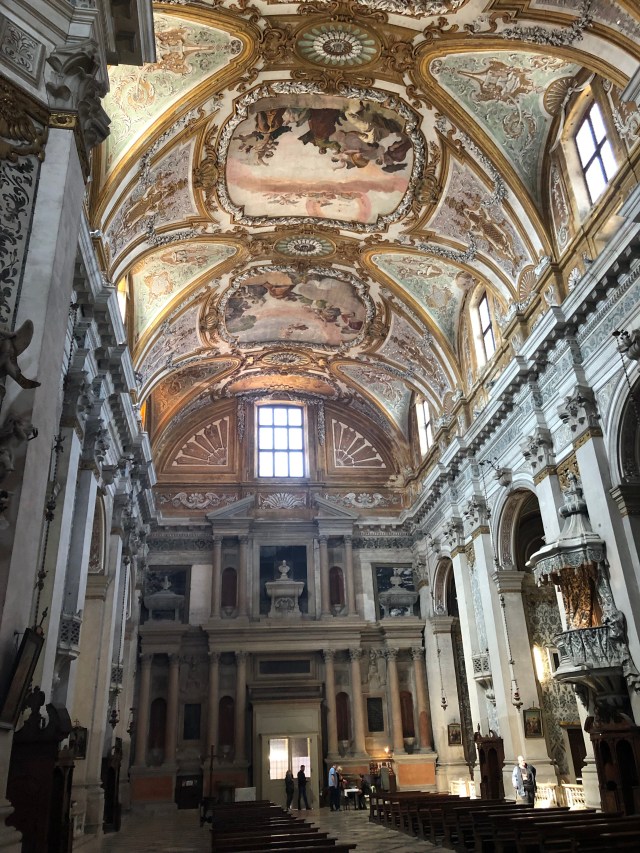
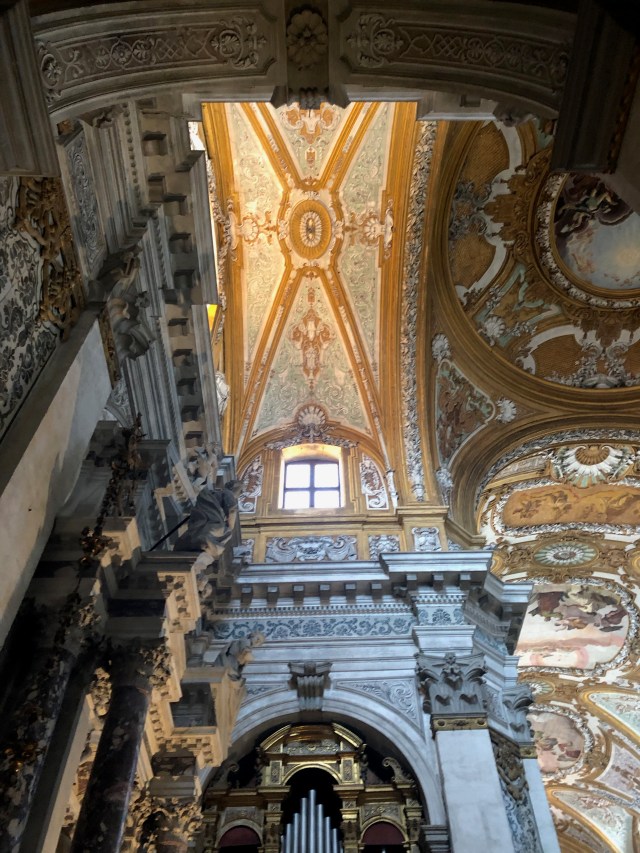
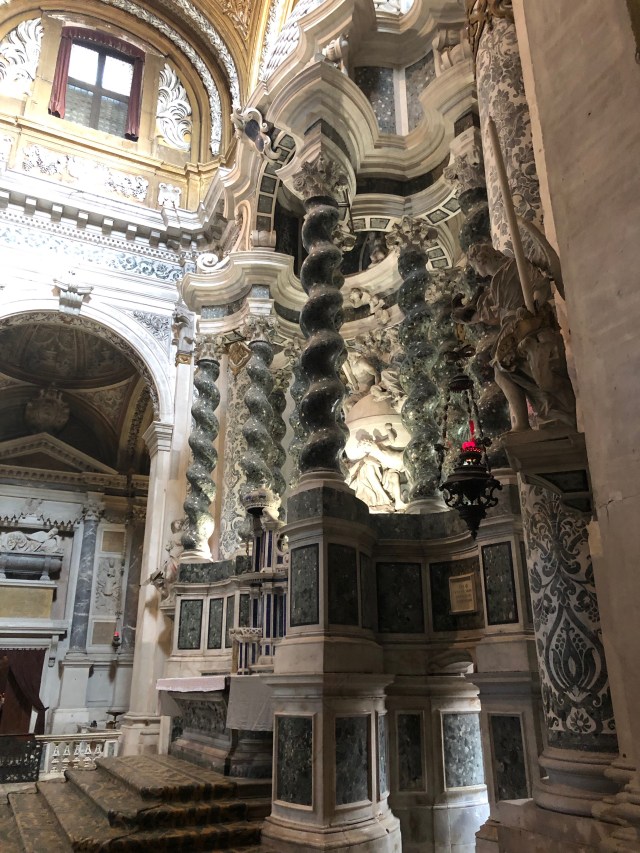
A subtle message from the Gesuiti — don’t fuck with us 





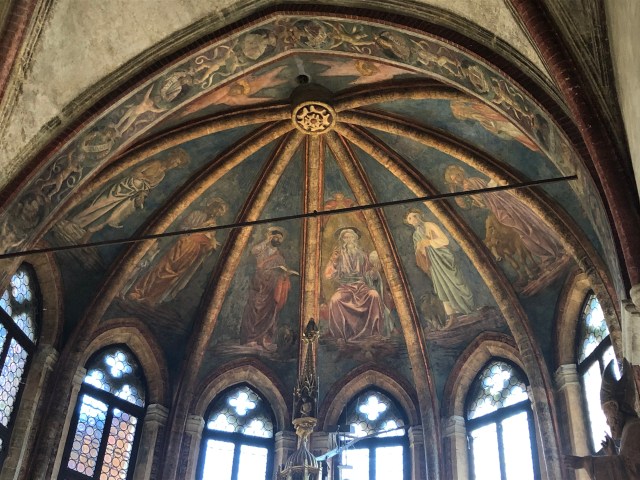
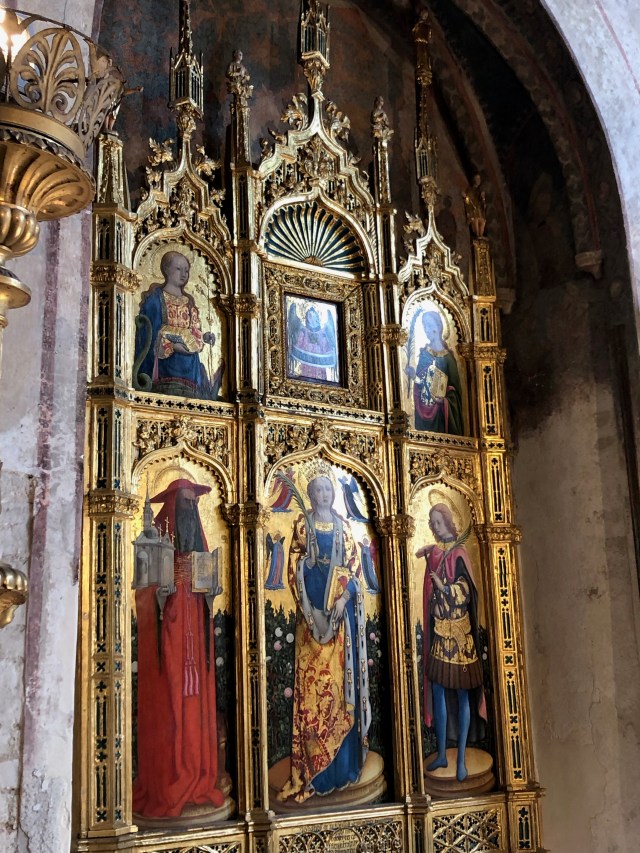

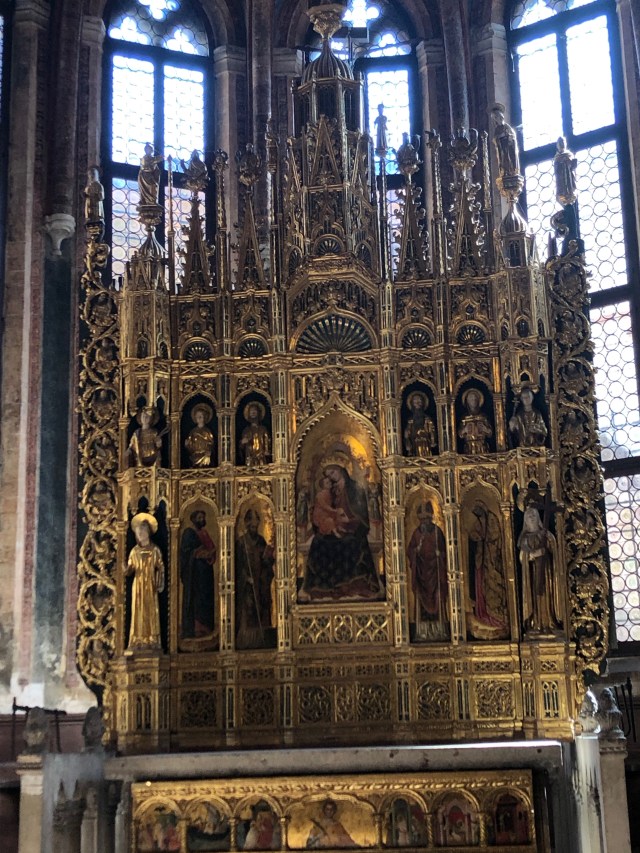
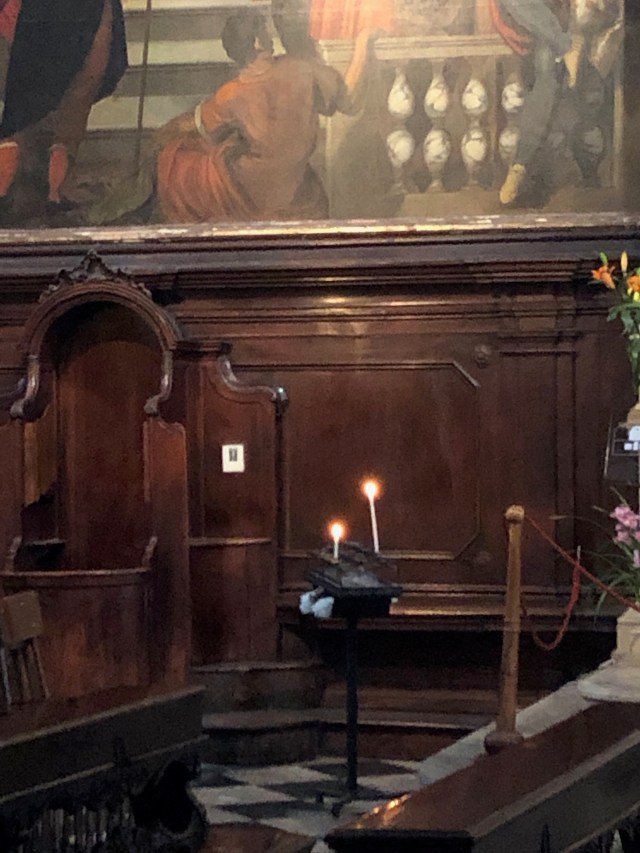

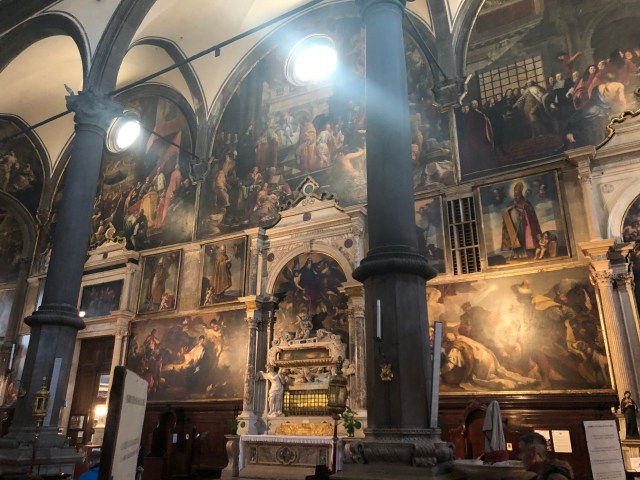
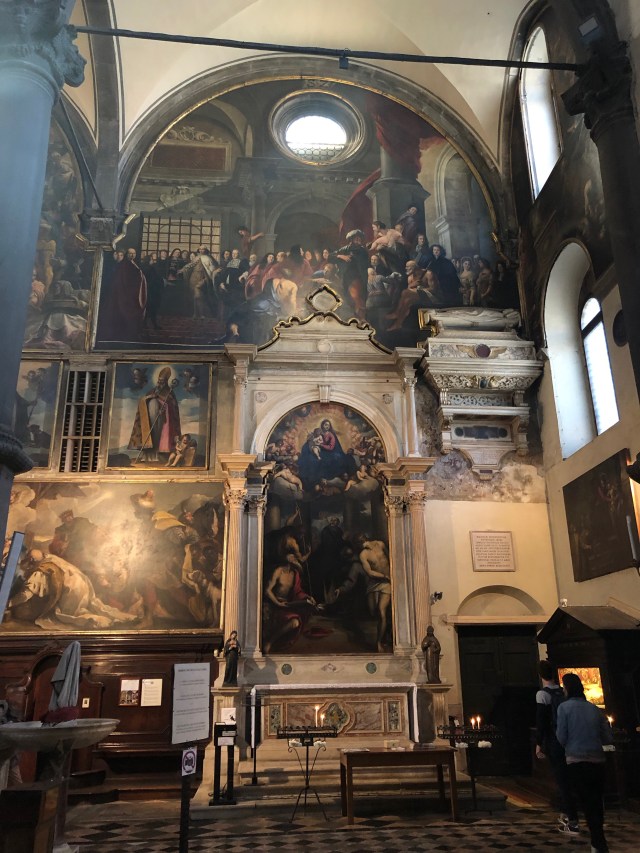
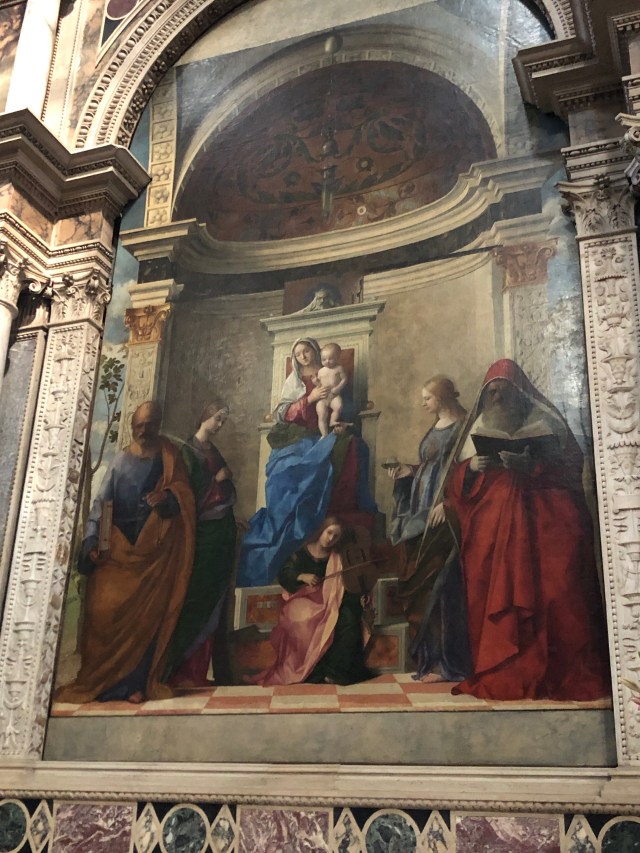
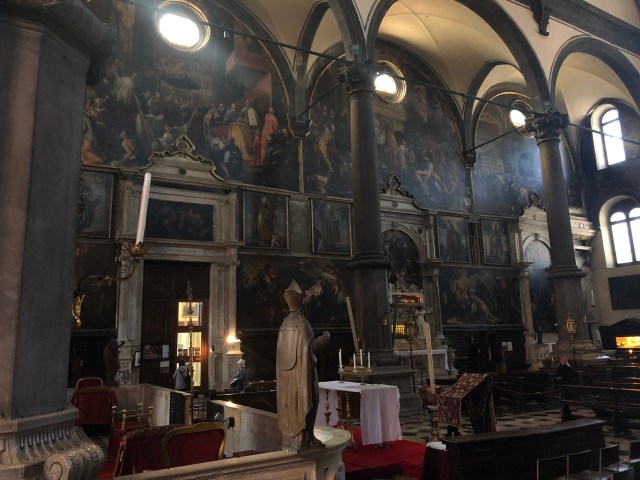

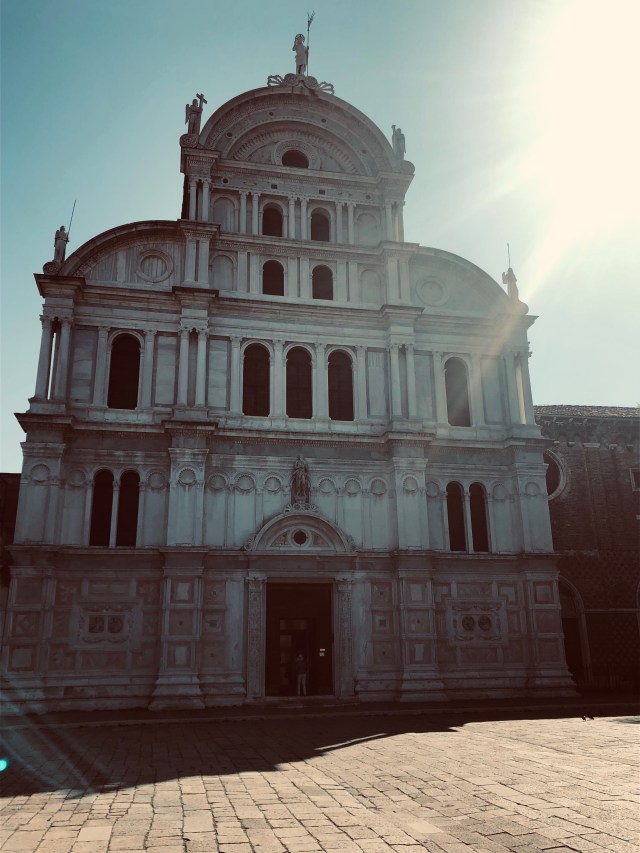
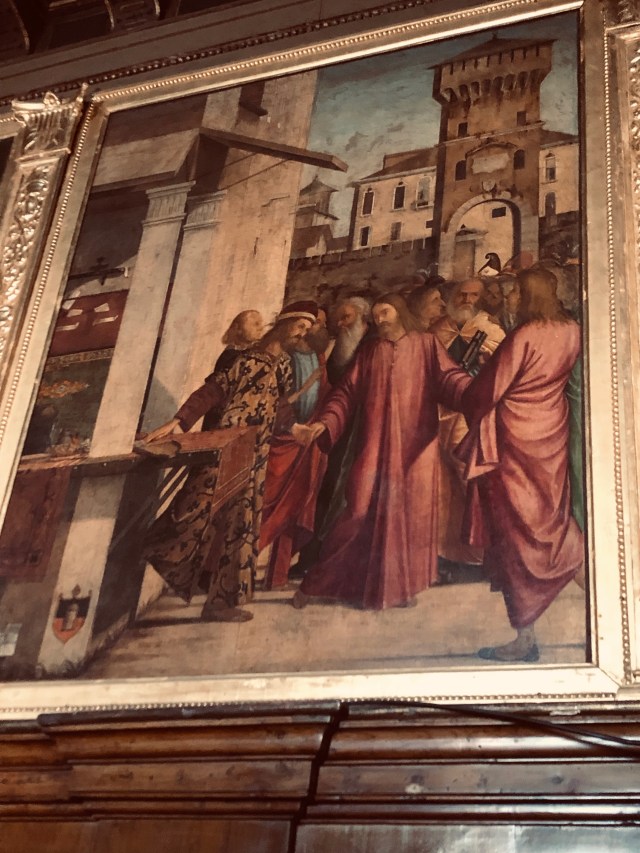
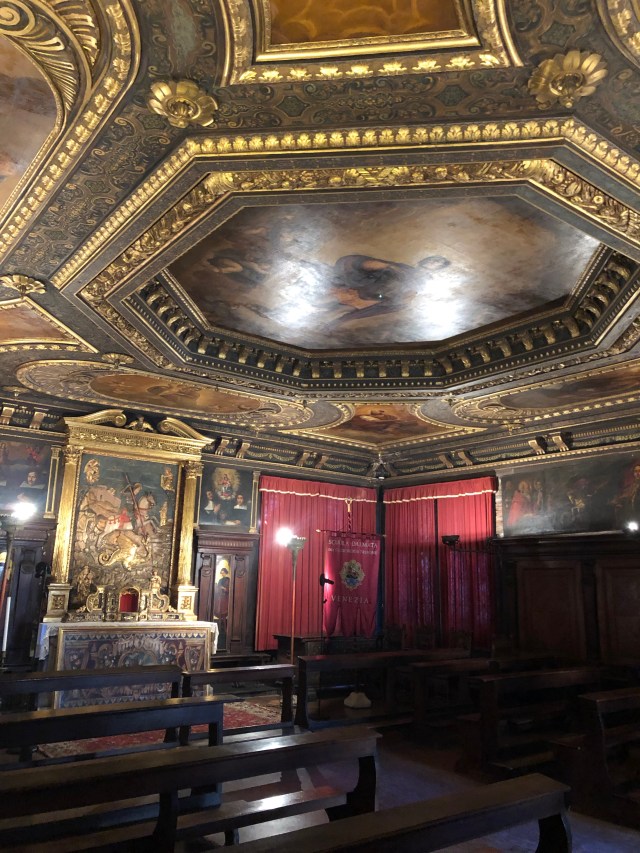
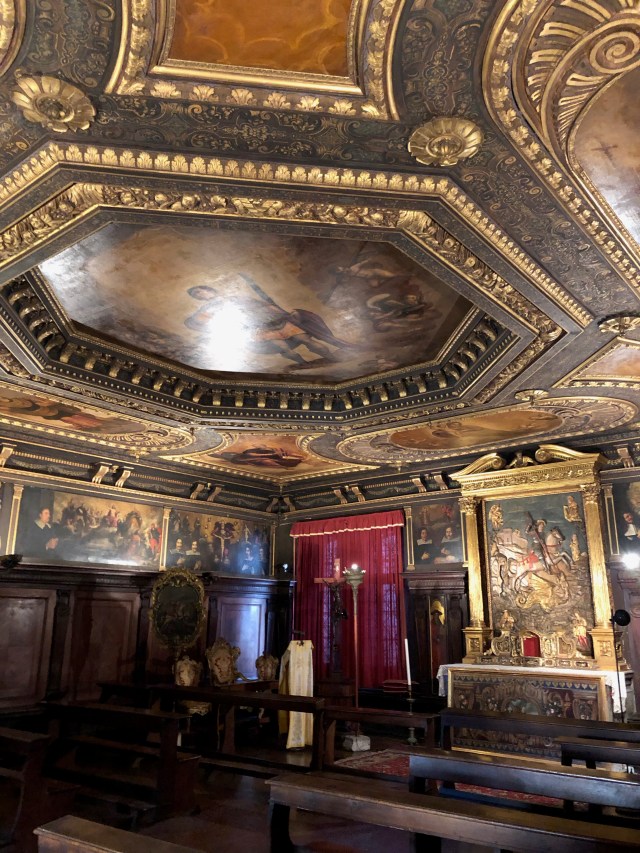

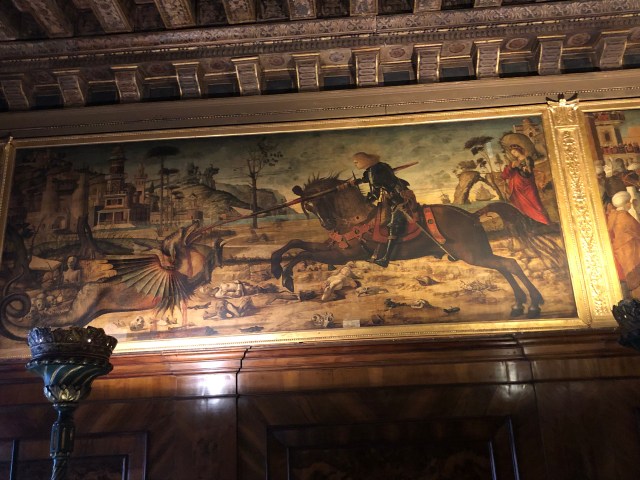
St. George. Carpaccio. 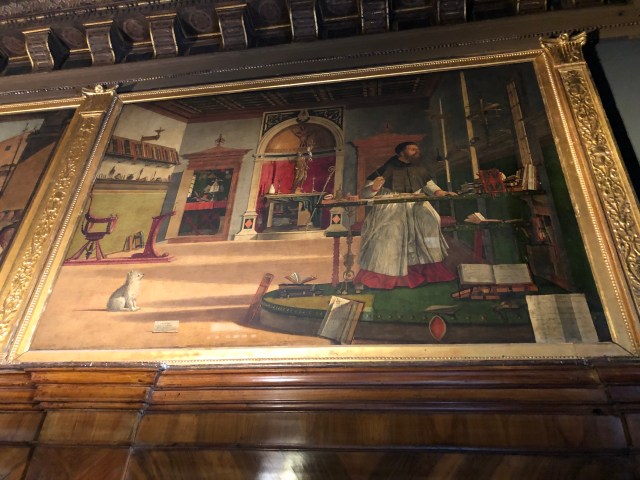
 AndyManshel.nyc